Cookie Consent
By clicking “Accept”, you agree to the storing of cookies on your device to enhance site navigation, analyze site usage, and assist in our marketing efforts. View our Privacy Policy for more information.

Teaching OOUX, Enterprise B2B complexity wrangling, OOUXing personal development


Sophia Prater is the creator of the ORCA Process, a systems-design method now used by thousands of UX, product, and content designers around the world. She coined the term Object-Oriented UX (OOUX) in 2015.
It all started at CNN in 2012 when handed the UX responsibility for election night (what would be Obama’s second win). Per usual, she was given four days to design the first screen for the first sprint — and her brain broke. She’s been asked to design a cog in a machine without thinking about the machine one too many times. Instead, she came in on Monday with her first system design: boxes, arrows, reusable concepts. And (thank GOD), leadership got it. They went with the new system — and the team nailed it.
That November, CNN.com was the only news outlet to deliver a responsive design. And it wasn’t just responsive. It was elegant, easy to use, and CNN blew past all their goal numbers. That win is what got Sophia on the speaking stage. (Here’s the original talk. Don’t judge — it was her first time public speaking! And thank you Marisa G and JJG for letting me up there).
With this new way of thinking and an emerging framework, Sophia stopped crying on the way home. She fell back in love with UX. Over then next couple years, , the imposter syndrome dissolved and her confidence (and effectiveness) blossomed as she finally got a grip on puzzles pieces. UX not only became more meaningful — but also way more fun. Not only could she see the puzzle pieces, she could click them together.
Even better, as the methodology emerged through the medium of post-it notes, she could help teams collaborate around those puzzle pieces. The only thing better than getting into puzzle-solving flow state is getting into puzzle-solving flow state with a team.
She has since taught OOUX from more than 30 conference stages (lost count) and been featured on Nielsen Norman Group's podcast and YouTube channel. As of 2026, she’s run 11 (eleven!) cohorts of the OOUX Certification — twelve weeks, live, and rigorous enough that most people describe finishing it as the hardest-yet-best thing they've done for their craft. Cohorts fill from a waitlist.
Through ORCA Sprints, she embeds with product teams to model the objects, relationships, and logic beneath their most complex systems — work she's done with Delta Air Lines, Meta, Autodesk, Macy's, athenahealth, CNN, and dozens more. She also hosts the UX Level Up Podcast and welcomes new students into the OOUX community daily.
Lately, Sophia has been pointing systems design at a bigger target: the business itself. She's OOUXing her own operations, building AI-powered business brains with ORCA, and teaching other systems thinkers to do the same.
She lives in the mountains of North Georgia with her husband Luke, surrounded by wineries, waterfalls, and cats.
Sophia Prater is the founder and lead UX designer at Rewired and the chief evangelist of Object-Oriented UX. Sophia teaches her OOUX methodologies at conferences, within companies, and through her OOUX Certification Program. She is the host of OOUX Happy Hour and the OOUX Podcast. Sophia has brought the complexity-untangling magic of OOUX to companies such as Facebook, Google, Uber, HelloFresh, Atlassian, Autodesk, Delta Airlines, Microsoft, Adobe and many more. Sophia lives outside of Atlanta in the beautiful north Georgia mountains, the wine country of the southeast United States, with her husband and business partner, Luke.

As for you Sophia, your passion, dedication, and care are incredible. Throughout the course I've looked at many posts from this and past cohorts and you're commenting and providing feedback pretty much everywhere. I know it's your course but I've not seen any other courses with so much engagement and qualitative feedback.
OOUX is an incredibly valuable tool for designers looking to tackle complexity. As someone that works with a complex products, I feel like I've been given the missing piece in my skillset to allow me to have a structured and confident approach to my practise, both in my own design and how I collaborate with different roles in my team. The course was perfectly structured, and the support from Sophia and her team of mentors was phenomenal!
My journey with UX involved completing 2 certificate programs. But even after completing countless classes, I still didn't feel prepared to fully be a UX Designer -- or work in UX -- partly because I didn't have a great handle on how to collaborate with developers.
When I was first introduced to OOUX, I seriously doubted its usefulness. Where was all of the rapid prototyping? Where was all of the visual design? I'm so grateful for Sophia's unrelenting work in showing the worth of OOUX, because once I saw how useful OOUX really is, I also saw how it was the missing piece in preparing me to work in UX with confidence.
Thanks to the community and my mentor, I've made it this far -- even when I doubted myself. I'm proud to have wrestled with really complex puzzles, indebted to those who've gone before and paved this delightfully tricky OOUX path, and excited to see what doors open as a result of completing the program!
The OOUX Masterclass Certification was one of the best things I've ever done to further my growth in the digital world. I was scared, clueless and intimidated by the amazing talent that was in the cohort with me but the experience ended up being exciting, enlightening and humbling. Everyone was so supportive and we all learned so much from each other. Sophia is a wonderful teacher whose knowledge is impressive and personality is even better - always making you feel comfortable. I look forward to growing in the OOUX world and seeing what the future holds!
The OOUX Certification course is one the most challenging I have experienced to date and so far the best.The robust learning materials, resources, feedback from Sophia and mentors are above and beyond. Adding OOUX and Sophia's ORCA process to my toolkit is the key to tackling complex design challenges. I look forward to continuing to learn and practice this process. I highly recommend this course to anyone tasked with designing for digital.
I've loved UX since my first day on the job in 2009. But in the early days of my career, I'd often feel like the process I was a part of needed more rigor. We seemed to wait until late in the game to tackle complexity—and this just led to a ton of rework. We'd try to break up the complexity by siloing features and functionality—and this just led to "frankenstein" designs. By studying human psychology as well as the object-oriented UI practice that were popular in the '90s, I created a rigorous methodology for breaking down complexity while also ensuring holistic, elegant, systemic UX and information architecture. This game-like process completely transformed my professional life. With OOUX and the ORCA process, I facilitate effective collaboration, break down team silos, and have a ton more fun doing my job as a UX designer. I honestly cannot imagine designing a digital environment without leveraging OOUX.

In this episode of The UX Level-Up Podcast, Sophia and Dan get into a tension that's been building for years — information architects and product designers are working in the same problem space and barely talking to each other, and AI is about to make that very, very expensive. They talk about what actually goes wrong on teams that skip the structural work, why the frenzy to use AI tools is adding
FYI: This is an affiliate link (we earn a small kickback if you buy).
 listen
In this episode of The UX Level-Up Podcast, Sophia and Angie get into what it actually looks like when a veteran content strategist finds a framework that finally clicks — and why Angie believes it's not just career-changing, but field-changing. If you've ever felt like the smartest person in a conversation but struggled to explain why something was off, this episode is for you.
FYI: This is an affiliate link (we earn a small kickback if you buy).
listenIn this episode of the podcast, Sophia and Mandi talk about OOUXing Horizon Forbidden West, why game UX isn’t about “making it easy,” and how bases, extensions, and conditional logic can make even the most complex systems more understandable (and more shareable for teams).
FYI: This is an affiliate link (we earn a small kickback if you buy).
listenUX practitioners often struggle with shifting requirements and increasing product complexity. Object-Oriented UX (OOUX) offers a structured approach to simplify digital products by focusing on core objects rather than pages or screens. Sophia Prater explains on the NN/g UX Podcast how OOUX improves usability, reduces inconsistencies, and streamlines collaboration across teams.
FYI: This is an affiliate link (we earn a small kickback if you buy).
listen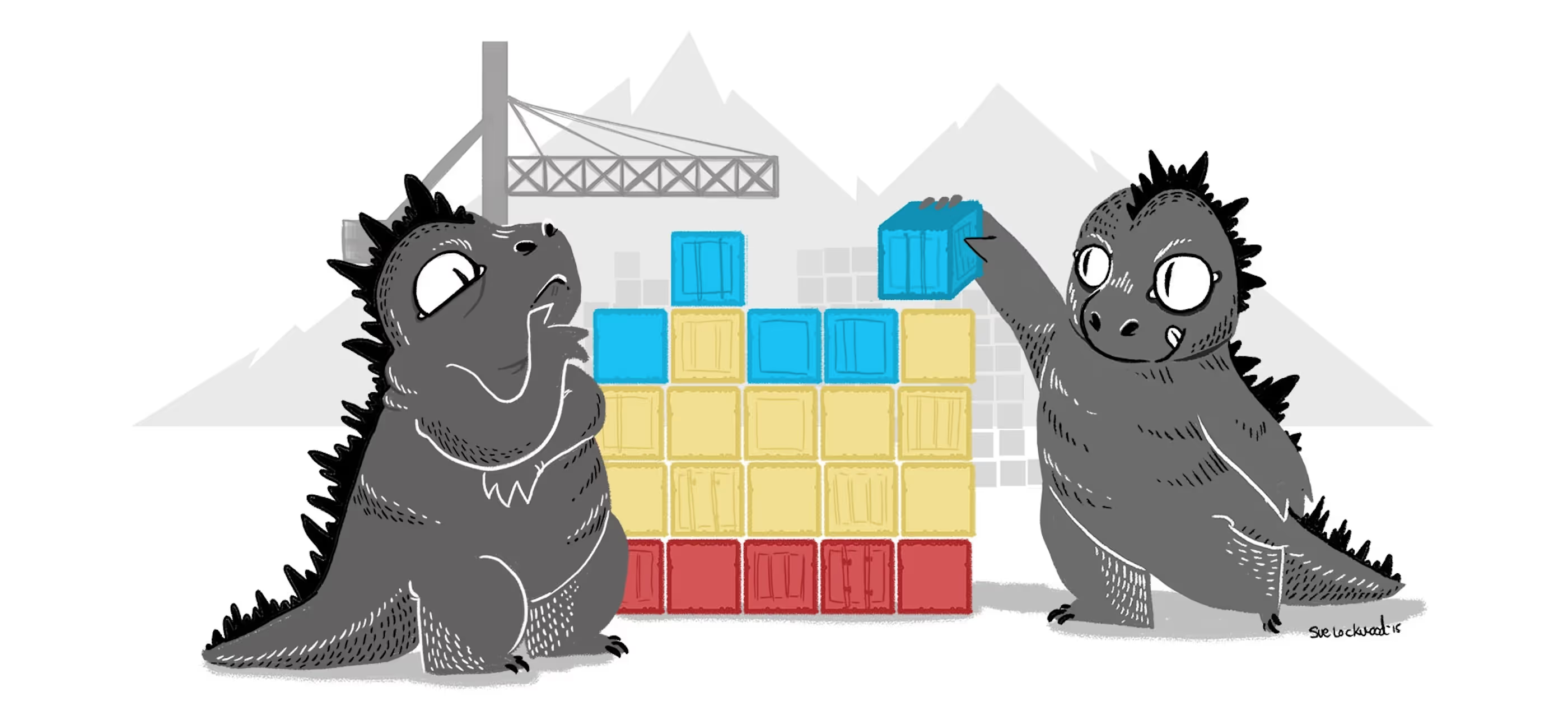
The original OOUX manifesto. You'll learn why designing "objects first" is pivotal and how it helps you define the core structure of your system. The process has evolved over the years into Sophia's ORCA process, but this 2015 article is still a great place to start.
FYI: This is an affiliate link (we earn a small kickback if you buy).
read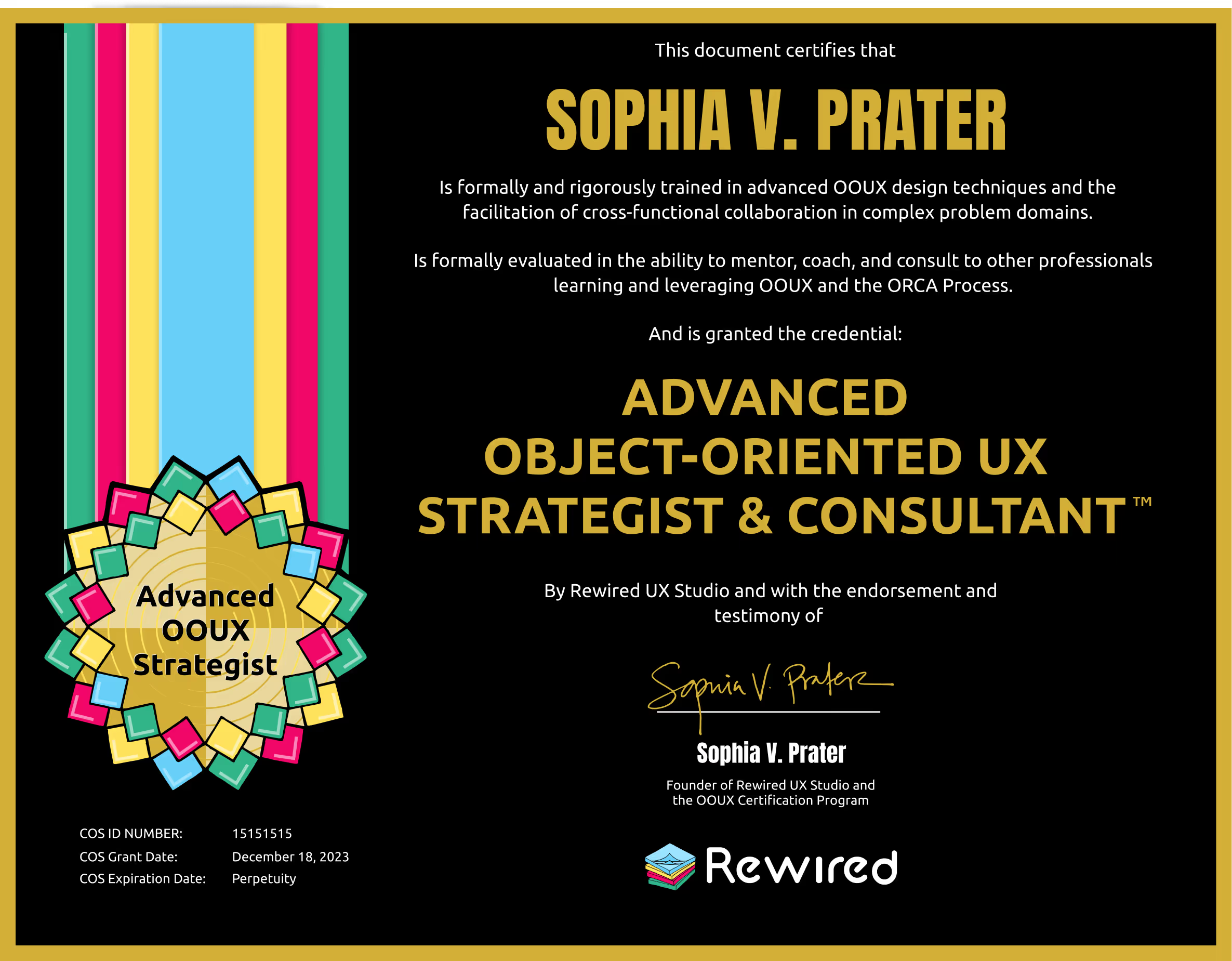
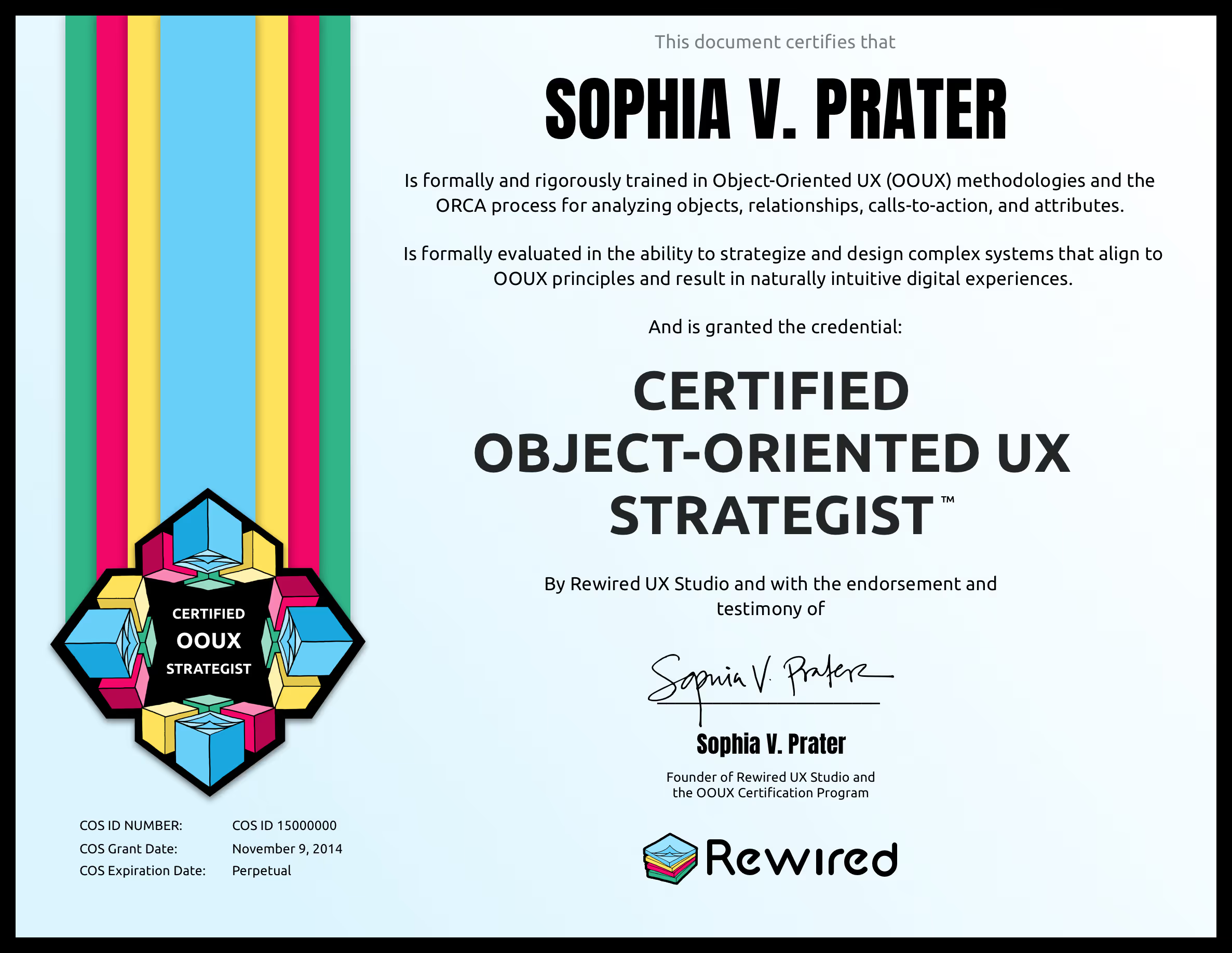
Work through the OOUX Masterclass with a cohort of other professionals. 1-on-1 coaching, personalized assignment reviews, office hours, and small-group study sessions. Finish with a valuable professional certification.
Join Waitlist